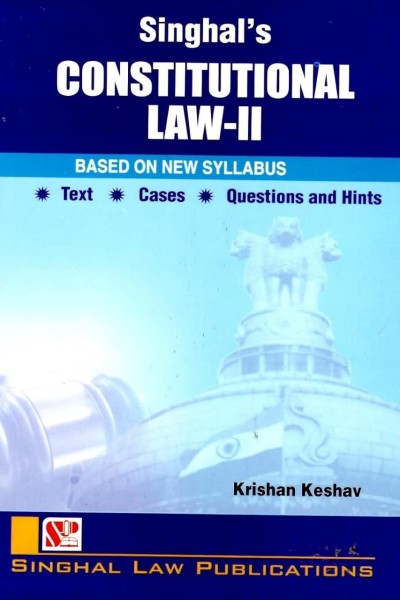
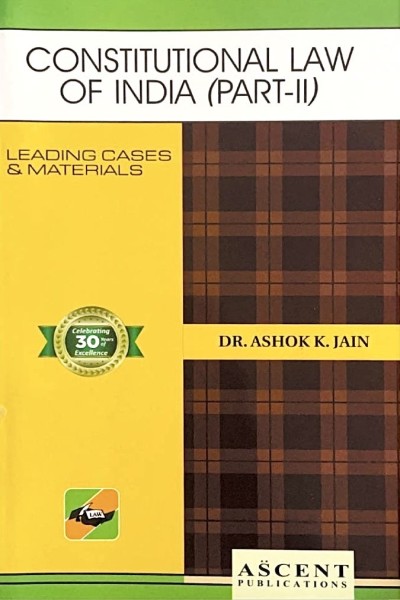
Singhal's Constitutional Law (Part 2) by Krishan Keshav is a comprehensive commentary on Fundamental Rights and related constitutional provisions under the Constitution of India. The book systematically covers Articles 12 to 35, 36 to 51, 51A, 308 to 323, and 368, explaining constitutional doctrines, limitations, enforcement mechanisms, and the evolving role of the judiciary. Written in simple and clear language, the text explains legal provisions in a step-by-step manner, supported by illustrations and relevant judicial interpretations, making complex constitutional concepts accessible to readers.
Key Features:
- Detailed coverage of all Fundamental Rights, including Equality, Freedoms, Protection in Criminal Law, Life and Personal Liberty, Religion, Culture, Education, and Constitutional Remedies
- In-depth discussion on Articles 19-22, including reasonable restrictions, preventive detention, arrest safeguards, and freedom of speech and expression
- Exhaustive treatment of Article 21, including natural justice, privacy, procedure established by law, and the Right to Education under Article 21A
- Separate, structured chapters on Writ Jurisdiction, PIL, locus standi, res judicata, laches, and alternative remedies under Article 32
- Analytical explanation of Directive Principles of State Policy, their classification, implementation, and relationship with Fundamental Rights
- Clear exposition of Fundamental Duties (Article 51A) with need, enforcement, and leading judicial pronouncements
- Comprehensive coverage of Civil Services under Articles 308-323, including doctrine of pleasure and constitutional safeguards
- Dedicated chapter on Amendment of the Constitution (Article 368), including the Doctrine of Basic Structure, Ninth Schedule review, and significant constitutional amendments
- Inclusion of leading case laws, landmark judgments, and question-and-answer sections for academic clarity and exam orientation
- Logical chapter sequencing aligned with LLB and judicial services syllabi
This book is ideal for LLB students, judicial services aspirants, law teachers, advocates, and competitive examination candidates seeking a clear, structured, and exam-oriented understanding of Constitutional Law focusing on Fundamental Rights and constitutional governance.


 Home > TEXTBOOKS > Constitutional Law > Constitution of India > 11th Edition, 2020


 1
1