EBC Webstore
Eastern Book Company

|
|||
|
|||
 Home > TEXTBOOKS > Civil Procedure and Practice > Torts and Consumer Protection > 27th Edition, 2025 Home > TEXTBOOKS > Civil Procedure and Practice > Torts and Consumer Protection > 27th Edition, 2025 |




 6
6

.jpg)
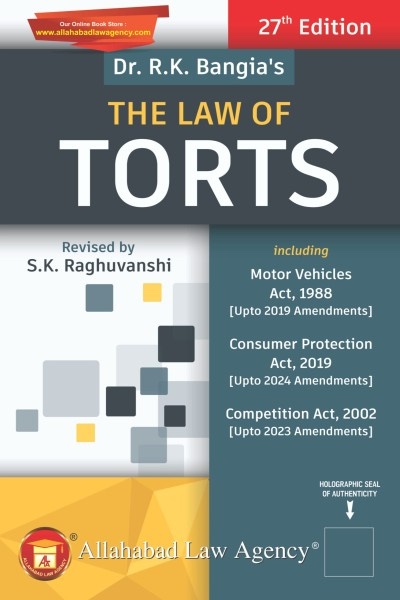
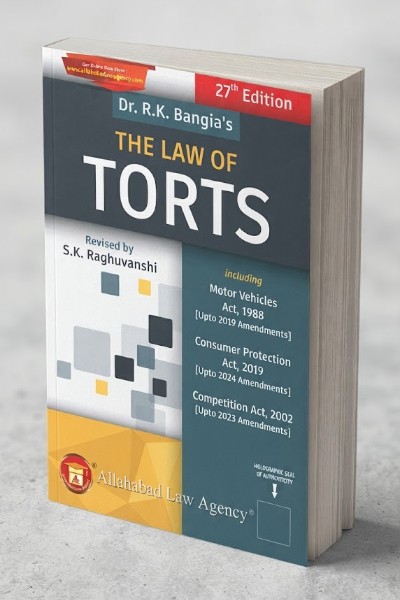
The Law of Torts by Dr. R.K. Bangia, revised by S.K. Raghuvanshi, is one of the most widely used textbooks in Indian legal education. Known for its clear language, logical structure and extensive use of case law, the book is a preferred resource for LLB and BA LLB students across the country.
This revised edition offers a comprehensive analysis of the principles of tort law, supported by illustrative examples, leading judicial decisions and academic commentary. The revision by S.K. Raghuvanshi ensures that the content is updated, accessible, and aligned with current legal developments.
Key Features:
This edition continues to serve as a reliable and insightful guide to tort law, incorporating modern statutory frameworks alongside traditional common law principles.

|
Click on TITLE to choose available options.
|
|
|
Click on TITLE to choose available options.
|

|
Click on TITLE to choose available options.
|

|

Click on TITLE to choose available options.
|

|
Click on TITLE to choose available options.
|
|
Click on TITLE to choose available options.
|

|
|

|
Click on TITLE to choose available options.
|
|
Click on TITLE to choose available options.
|
|
||
|
||
|